
Organophosphate poisoning refers to toxic chemicals overstimulating the brain by blocking enzymes that break down acetylcholine. According to the MSD manual, the main symptoms include excessive salivation, tearing, uncontrolled urination, gastrointestinal distress, muscle twitches, and severe respiratory difficulties. We frequently see common causes of this life-threatening condition involving agricultural insecticide exposure, accidental inhalation, or intentional ingestion.
For these emergencies, our primary treatments rely on immediate physical decontamination, critical airway support, and the rapid intravenous administration of antidotes like atropine and pralidoxime. Besides these initial medications, our emergency protocols also utilize diazepam. This medication works for organophosphate poisoning by rapidly calming the overactive central nervous system. Consequently, it quickly halts life-threatening seizures in our patients.
Because of these potent neurological effects, diazepams are strictly regulated Class C controlled drugs in the UK. Therefore, they are usually bought exclusively through licensed pharmacies with a valid doctor’s prescription.
What is Organophosphate Poisoning?
Organophosphate poisoning, also known as organophosphate toxicity, is a severe clinical emergency caused by chemicals that irreversibly inhibit acetylcholinesterase, triggering dangerous neurological overstimulation in our patients.
According to global health estimates, these toxic exposures affect roughly 3 million people annually. Also, in our clinical experience, organophosphates cause up to 80% of these pesticide-related hospital admissions. According to Dr. Eric Strong, “the clinical presentation is a classic cholinergic crisis where patients can essentially drown in their own copious secretions.”
In our observation, this severe reaction happens because the chemicals prevent the breakdown of acetylcholine. Consequently, continuous receptor overstimulation leads directly to the dangerous cholinergic toxicity we frequently treat. We most commonly see agricultural pesticides as the primary poisoning sources. However, these compounds are also weaponized globally as deadly nerve agents. The history of these chemicals began with their synthesis in 1932. Besides, this is when they were first mentioned in medical studies detailing their profound impact on the human nervous system.
What is The History of Organophosphate Poisoning?
The history of organophosphate poisoning dates back to their initial origins in 19th-century chemical synthesis. Later, military scientists developed these potent compounds into highly lethal nerve agents before World War II. Furthermore, we subsequently witnessed their widespread use transition into commercial agricultural pesticides. In our clinical practice, we clearly understand the scientific basis of this specific toxicity. Organophosphates aggressively alter acetylcholinesterase enzymes in our patients. Consequently, this leads to a dangerous overstimulation of the entire nervous system. Besides, this rapid enzymatic blockade directly triggers the severe cholinergic symptoms we frequently manage in the emergency room today.
What are The Signs and Symptoms of Organophosphate Poisoning?
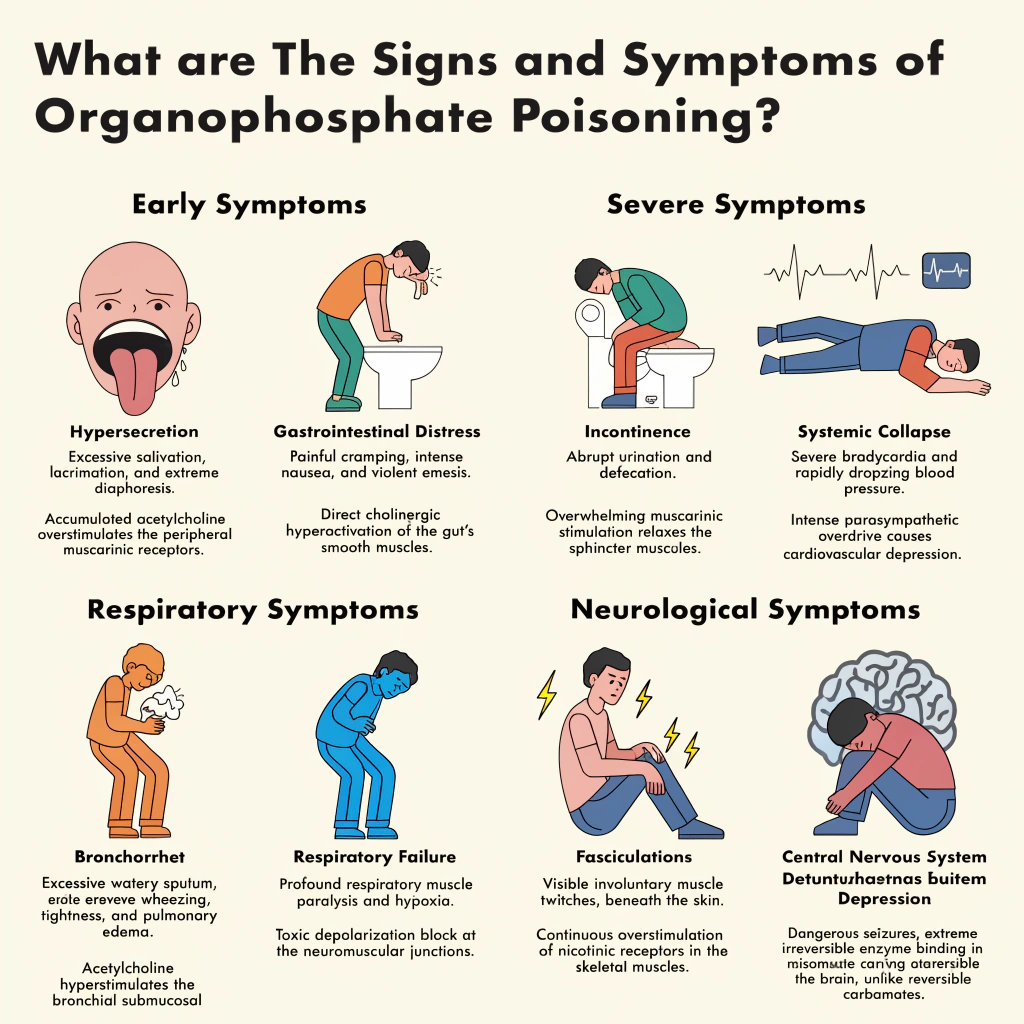
The symptoms of organophosphate poisoning include a rapid onset of life-threatening physical manifestations spanning multiple organ systems. The symptoms of organophosphate poisoning are listed below.
Early Symptoms
- Hypersecretion: Hypersecretion refers to the rapid, uncontrolled release of fluids from our patients’ exocrine glands. Also, this includes excessive salivation, lacrimation, and extreme diaphoresis. Consequently, this occurs because accumulated acetylcholine overstimulates the peripheral muscarinic receptors.
- Gastrointestinal Distress: Gastrointestinal distress refers to severe acute abdominal discomfort and hypermotility. Furthermore, this includes painful cramping, intense nausea, and violent emesis. Besides, this happens due to the direct cholinergic hyperactivation of the smooth muscles in the gut.
Severe Symptoms
- Incontinence: Incontinence refers to the sudden, involuntary loss of bladder and bowel control. In our clinical experience, this includes abrupt urination and defecation. Therefore, this results from the overwhelming muscarinic stimulation relaxing the sphincter muscles.
- Systemic Collapse: Systemic collapse refers to the critical deterioration of vital clinical signs. Also, this includes severe bradycardia and rapidly dropping blood pressure. Consequently, this cardiovascular depression occurs because of intense parasympathetic overdrive on the heart.
Respiratory Symptoms
- Bronchorrhea: Bronchorrhea refers to the excessive production of watery sputum in the lungs. Furthermore, this includes severe wheezing, chest tightness, and pulmonary edema. Besides, this develops because acetylcholine hyperstimulates the bronchial submucosal glands.
- Respiratory Failure: Respiratory failure refers to the life-threatening inability to maintain adequate breathing. Also, this includes profound respiratory muscle paralysis and hypoxia. Consequently, this critical state happens due to the toxic depolarization block at the neuromuscular junctions.
Neurological Symptoms
- Fasciculations: Fasciculations refer to visible, involuntary muscle twitches beneath the skin. In our patients, this includes generalized tremors and progressive muscle weakness. Furthermore, this is caused by the continuous overstimulation of nicotinic receptors in the skeletal muscles.
- Central Nervous System Depression: Central nervous system depression refers to severe cognitive decline and altered mental status. Also, this includes dangerous seizures, extreme confusion, and eventual coma. Besides, the initial presentation is often misunderstood as carbamate poisoning. However, organophosphates cause irreversible enzyme binding in the brain, unlike reversible carbamates.
What is The Difference Between Organophosphate Poisoning and Carbamate Poisoning?
The difference between organophosphate poisoning and carbamate poisoning is the chemical duration and reversibility of the enzyme inhibition. Organophosphates permanently bind to and deactivate acetylcholinesterase. However, carbamates only temporarily inhibit this critical enzyme. Consequently, carbamate exposure leads to a much shorter and often self-resolving clinical course for the patient. Besides this, organophosphate poisoning is sometimes misunderstood with anticholinergic poisoning as well. However, anticholinergic toxicity typically presents with notably dry skin and decreased secretions. In contrast, we typically observe our organophosphate patients presenting with dangerously excessive bodily fluids.
What is The Difference Between Organophosphate Poisoning and Anticholinergic Poisoning?
The difference between organophosphate poisoning and anticholinergic poisoning is the opposing physiological effect they have on the nervous system. Organophosphates cause massive overstimulation by preventing acetylcholine breakdown. Consequently, this leads to excessive bodily secretions like severe sweating and salivation. However, anticholinergic agents directly block these acetylcholine receptors. Therefore, they cause dangerously dry skin, urinary retention, and diminished secretions in our patients. Understanding the exact causes of the toxicity is absolutely critical. Besides, this precise knowledge allows medical professionals to rapidly administer the correct, life-saving antidotes.
What are The Causes of Organophosphate Poisoning?
The causes of organophosphate poisoning include various environmental, industrial, and intentional contacts with toxic acetylcholinesterase inhibitors. The causes of organophosphate poisoning are listed below.
- Agricultural Pesticides: Agricultural pesticides are strong commercial chemicals applied to crop fields to kill insects and boost yields. Agents like chlorpyrifos and diazinon absorb rapidly during spraying. Consequently, they distribute to various body parts to permanently block acetylcholinesterase in our patients.
- Household Exposure: Household exposure involves accidental ingestion, breathing, or skin contact with improperly stored pest control products at home. This includes common chemicals like malathion. Besides, the mechanism relies on direct absorption through the skin or mouth, causing dangerous enzyme blockage.
- Occupational Exposure: Occupational exposure is the regular workplace contact experienced by chemical makers, farm workers, and pest control staff. Prolonged handling without proper gear allows harmful skin and lung absorption. Also, this continuous contact progressively drains the essential acetylcholinesterase reserves.
- Chemical Warfare Agents: Chemical warfare agents refer to weaponized organophosphate compounds created by militaries to cause rapid mass casualties. The mechanism involves immediate breathing or skin contact with deadly nerve agents like sarin. Furthermore, these instantly bypass normal breakdown to trigger severe nervous system failure.
How Does Organophosphate Poisoning Affect The Body?
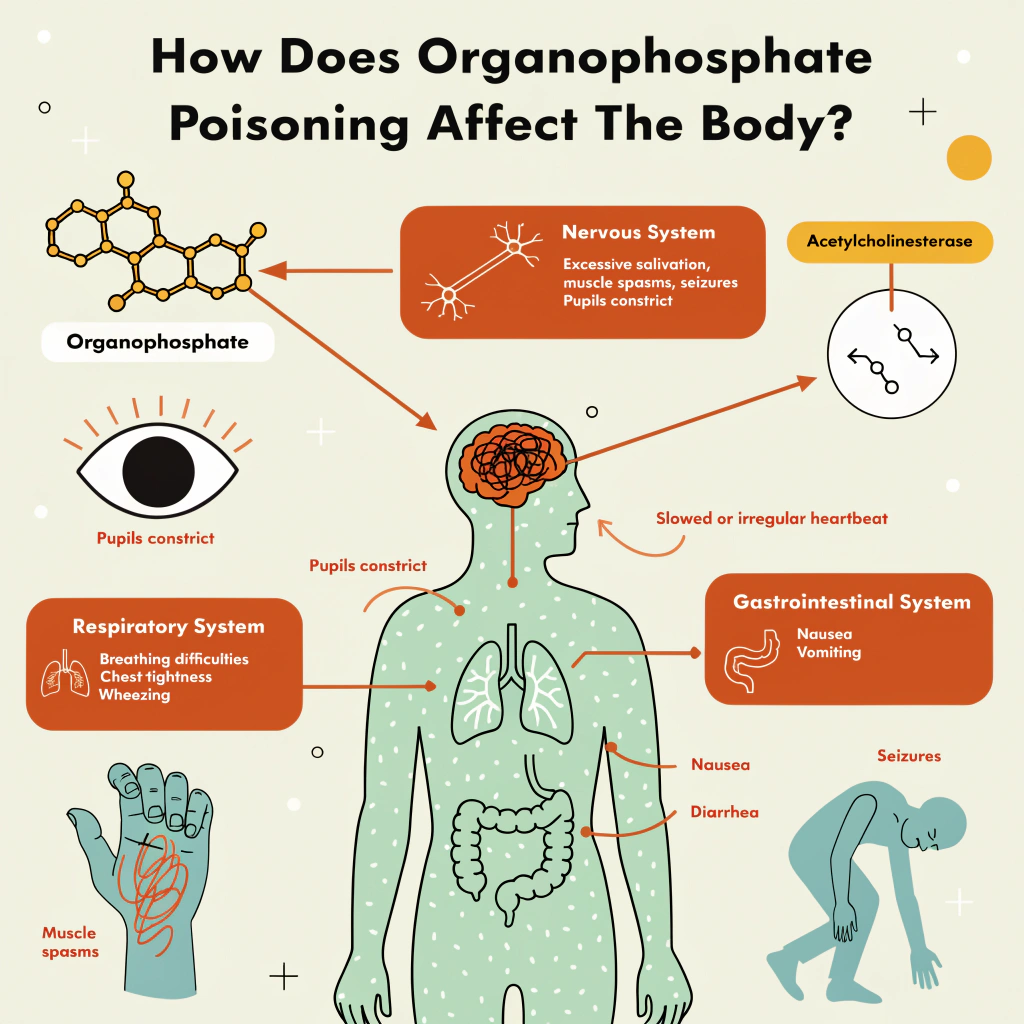
The ways organophosphate poisoning affects the body are listed below.
- Acetylcholinesterase inhibition means the toxic chemical permanently blocks the crucial enzyme. Consequently, this stops normal neurotransmitter breakdown.
- Acetylcholine accumulation involves a massive buildup of chemical signals in the nervous system. Besides, this rapidly overstimulates receptors.
- A cholinergic crisis refers to severe whole-body overstimulation, causing excessive fluids and dangerous muscle spasms in our patients.
- Respiratory failure is the life-threatening inability to breathe properly. Furthermore, this results from lung fluid and muscle paralysis.
- Intermediate syndrome involves delayed muscle weakness occurring days later. Also, early diagnosis is important to prevent breathing loss.
- Organophosphate-induced delayed neuropathy means nerve damage appearing weeks after exposure. Consequently, this causes long-term leg and arm weakness.
- Cognitive and neurological effects refer to severe confusion, seizures, and memory issues. However, rapid treatment limits brain damage.
How is Organophosphate Poisoning Diagnosed?
According to a clinical study by Sungur and Güven, and based on our observation, rapid diagnosis is critical for survival. The main ways to diagnose organophosphate poisoning are listed below.
- Clinical evaluation involves physically examining our patients for classic overstimulation signs like excessive sweating and pinpoint pupils.
- Exposure history means thoroughly reviewing recent chemical contacts. Besides, noting any pesticide exposure history is absolutely crucial.
- Cholinesterase testing refers to drawing blood to check enzyme levels. Consequently, severely reduced activity confirms the toxicity.
- Differential diagnosis is separating this from similar illnesses. Furthermore, we must carefully rule out reversible carbamate poisoning.
- Safety planning involves checking the patient’s living environment post-recovery. However, we always remind everyone that prevention is better.
How to Prevent Organophosphate Poisoning?
To prevent organophosphate poisoning, follow the tips listed below.
- Safe pesticide handling involves carefully following all chemical label instructions. Also, we always recommend mixing them outdoors.
- Using protective equipment means wearing proper masks, gloves, and gowns. Consequently, this prevents harmful skin and lung absorption.
- Occupational safety refers to ensuring proper ventilation in agricultural workspaces. Furthermore, regular employee health checks protect our patients.
- Household prevention means securely locking domestic chemicals away from children. Besides, this stops accidental indoor ingestions and spills.
- In emergency cases, immediate decontamination and contacting poison control is vital. However, rapid hospital transport always saves lives.
When to Seek Emergency Help for Organophosphate Poisoning?
You should seek emergency help for organophosphate poisoning when any suspected chemical exposure occurs. It is a critical medical emergency, and immediate medical attention is needed right after exposure, especially if symptoms appear or worsen quickly in our patients. You must watch closely for critical emergency warning signs. These include severe breathing difficulty, sudden seizures, pinpoint pupils, loss of consciousness, muscle twitching, or excessive drooling. If any of these occur, call emergency services and contact poison control immediately. Rapid hospitalization and administration of antidotes is absolutely required for curing this dangerous condition.
Are There Any Cures for Organophosphate Poisoning?
No, there is no single or permanent cure for organophosphate poisoning because the toxic chemicals can irreversibly bind to the body’s enzymes over time. However, the condition is highly treatable in the emergency room. Without rapid intervention, organophosphate poisoning can be fatal for our patients. Therefore, proper treatment is essential to prevent long-term neurological damage or death. This emergency care relies on the immediate administration of specific antidotes, such as atropine and pralidoxime. Also, we utilize these powerful medications to rapidly stabilize the nervous system and reverse the life-threatening cholinergic crisis.
What are The Treatments of Organophosphate Poisoning?
The treatment options for organophosphate poisoning involve immediate physical interventions, vital respiratory assistance, and rapid intravenous medications. The treatments of organophosphate poisoning are listed below.
- Immediate Decontamination: Immediate decontamination refers to the rapid removal of toxic chemicals from the patient’s body surfaces by removing contaminated clothing and washing the skin with copious water. This critical first step halts further poison absorption into the bloodstream, which helps individuals avoid worsening symptoms before a doctor can assess them.
- Airway and Respiratory Support: Airway and respiratory support involves clearing excessive lung fluids and providing essential oxygen support to prevent fatal hypoxia caused by severe muscle paralysis and dangerous airway constriction. This treatment ensures individuals maintain adequate breathing, and in severe cases, ventilator management keeps them alive while the body recovers.
- Atropine Therapy: Atropine therapy is an evidence-based emergency intervention using a competitive antagonist to quickly block muscarinic acetylcholine receptors, stopping the massive overstimulation of the parasympathetic nervous system. Consequently, this powerful medication dries up excessive bodily fluids and stabilizes the heart rate, providing immediate life-saving relief for individuals experiencing toxicity.
- Pralidoxime (2-PAM): Pralidoxime refers to a specific antidote that detaches toxic organophosphate molecules from acetylcholinesterase enzymes, directly restoring normal enzyme function and reversing critical muscle weakness in patients. Proper antidote timing is crucial here, as it must be given before the chemical bond becomes permanent to help individuals regain independent breathing.
- Benzodiazepines for Seizures: Benzodiazepines for seizures involve the use of strong anticonvulsant medications like diazepam to rapidly calm the overactive central nervous system and halt uncontrolled electrical brain activity. Besides stopping active convulsions, this effectively protects the brain from permanent damage, which significantly improves the overall recovery outcomes for our patients.
Is Seeing a Doctor Necessary Before Taking Organophosphate Poisoning Medications?
Yes, seeing a doctor is necessary before taking organophosphate poisoning medications because these antidotes are highly potent drugs requiring precise emergency dosing. Strict medical supervision is required to prevent fatal complications. Giving these treatments incorrectly can actually worsen the condition and severely harm our patients. Before giving medications, we carefully evaluate the person’s specific symptoms, lung sounds, and heart rate. Furthermore, we continuously monitor their vital signs and blood oxygen levels throughout the entire treatment to ensure it is working safely.
What are the Best Medications for Organophosphate Poisoning?
The best medications for organophosphate poisoning include specific chemical antidotes, anticholinergic agents, and strong anticonvulsants required to rapidly reverse the life-threatening neurological toxicity in our patients. The medications for organophosphate poisoning or organophosphate poisoning are listed below.
- Atropine: Atropine refers to a critical anticholinergic medication that rapidly blocks muscarinic receptors. Consequently, it effectively dries up excessive life-threatening secretions and stabilizes the heart rate in our patients.
- Pralidoxime: Pralidoxime is a targeted enzyme reactivator given intravenously. Furthermore, this essential antidote detaches the toxic chemical bond, which successfully restores normal acetylcholinesterase function and relieves severe muscle paralysis.
- Diazepam: Diazepam refers to a powerful benzodiazepine utilized to rapidly calm the overactive nervous system. Besides, we administer this to halt uncontrolled electrical activity and prevent dangerous, life-threatening seizures.
How Does Diazepam Work in Organophosphate Toxicity?
Diazepam works in organophosphate toxicity by rapidly calming the severe neurological overstimulation. It acts as a powerful central nervous system depressant. Specifically, the medication binds directly to GABA receptors in the brain.
Diazepam significantly enhances the inhibitory effects of GABA. This specific mechanism is vital for treating our patients. It helps prevent and control dangerous seizures. Also, it effectively reduces severe muscle fasciculations. Furthermore, stopping these intense convulsions early helps limit long-term brain damage.
What are the Legal Ways to Buy Diazepam for Organophosphate Toxicity in the UK?
The legal ways to buy diazepam for organophosphate poisoning in the UK are listed below.
- NHS Prescriptions: NHS prescriptions mean our doctors provide a valid legal document for patients.
- Private Clinics: Private clinics involve independent doctors issuing a paid prescription for our patients.
- Licensed Pharmacies: Licensed pharmacies mean registered dispensaries that require a prescription to buy it.
- Verified Online Pharmacies: Verified online pharmacies mean approved UK websites requiring an electronic prescription.
Is It Possible to Buy Diazepam for Organophosphate Poisoning in the UK Without a Prescription?
No, it is not possible to buy diazepam for organophosphate poisoning without a prescription in the UK because it is strictly regulated to ensure patient safety. Specifically, diazepam is a Class C, Schedule 4 controlled drug under UK law. Professional medical oversight is necessary when managing the severe symptoms of organophosphate poisoning. Also, quickly identifying the exact organophosphate toxicity causes helps us determine the safest clinical approach. If you are looking for diazepam for sale online, please make sure to follow your healthcare provider’s advice first, as they will prescribe the best medication according to safe NHS Prescribing guidelines.